🔍 INVESTIGATIVE DOSSIER
THE MYSTERY OF DOLLY’S BRACES
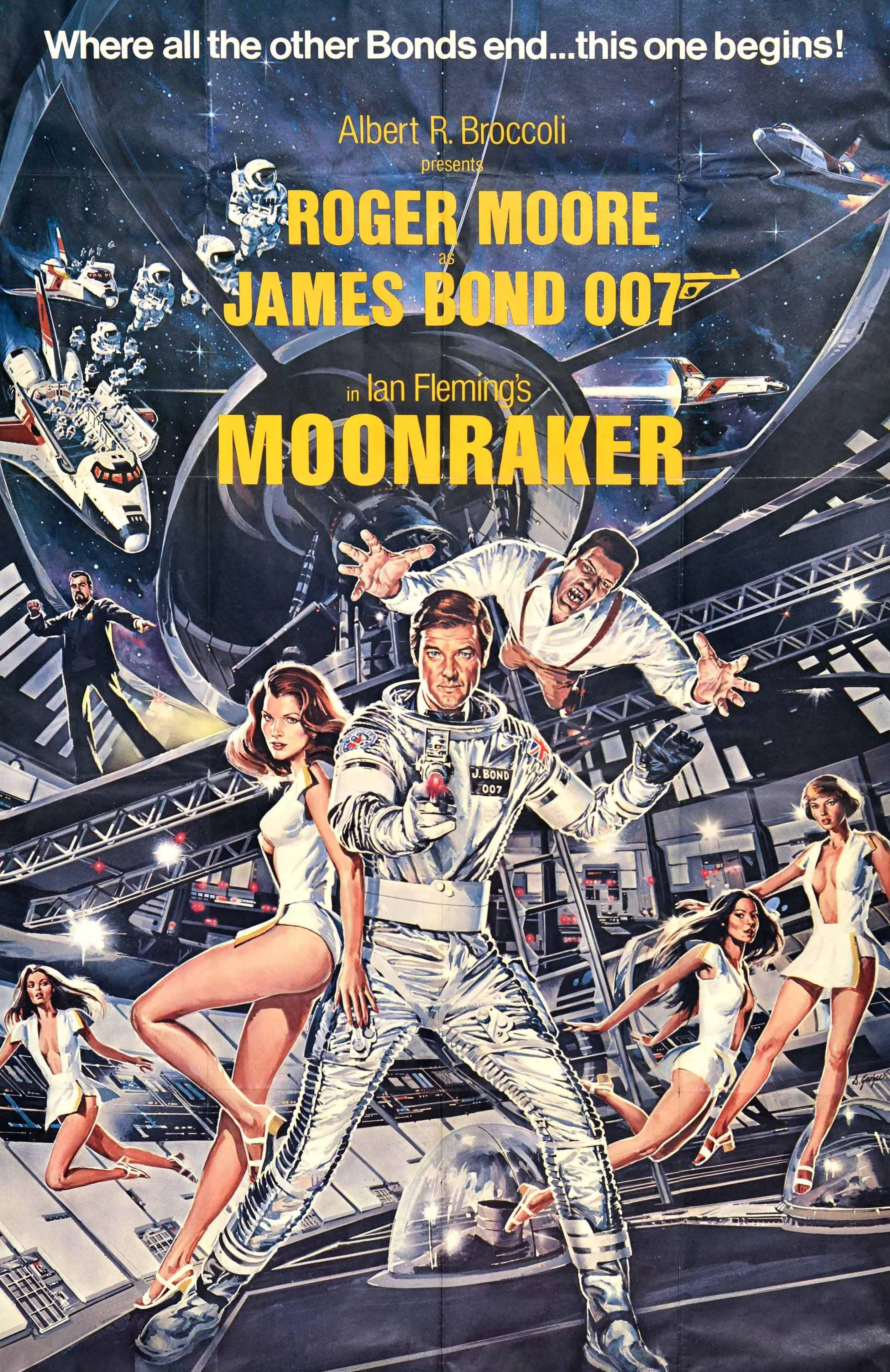
MOONRAKER (1979) — Human Perception, Altered Reality & the Limits of Memory
Filed by: Division of Human Perception & Anomalous Reality Research
Case Status: UNRESOLVED — Evidence inconclusive, phenomenon confirmed
Section 1: Establishing the Phenomenon
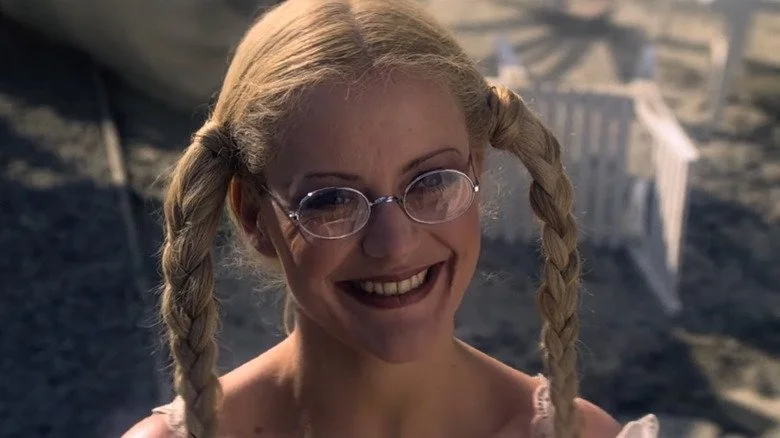
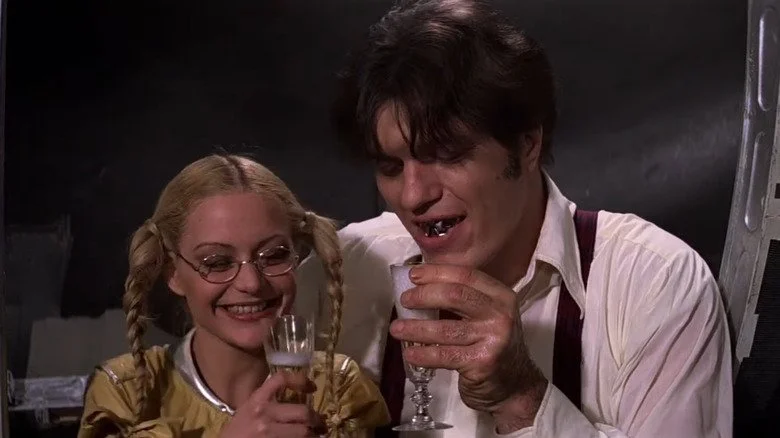
This is widely considered one of the biggest debates in the Mandela Effect community. Many people remember Dolly — the love interest of Jaws in the 1979 James Bond film Moonraker — as wearing braces on her teeth. The central claim is that when Jaws smiles his famous metallic grin at Dolly, she returns the smile and reveals her own dental hardware, creating a comedic mirror-image connection. However, all currently available versions of the film — VHS, DVD, and Blu-ray — show Dolly with plain, unadorned white teeth.
The scale of this collective belief is remarkable. MI6, the world’s most visited unofficial James Bond website, conducted a Twitter poll asking Bond fans what physical characteristic first attracted Jaws to Dolly at first sight. Almost half — 47% — said it was her braces. Yet, by all measurable evidence currently available, the character never wore braces.
Section 2: The Official Position
The official stance from multiple authoritative sources is unequivocal — or at least, it presents itself as such.
MI6 has confirmed on the record that no change has been made to the film. The actress who played Dolly, Blanche Ravalec, is stated to have not worn braces in the film, a position corroborated by others on the production as well as original still photography taken on set.
In a text conversation with researcher Laurent Perriot, Blanche Ravalec herself stated:
“No, Dolly never had braces. It was never even a question.”
Adding a further layer of apparent finality, a film collector examined an original 35mm print of Moonraker from 1979 — one of the actual reels that played in movie theaters. The colors were slightly faded, as is typical of the era, but the examination reportedly showed that Dolly had no braces in that version of the film.
So the case appears closed… until you examine what follows.
Section 3: The Evidence FOR the Braces — Cracks in the Official Narrative
3A — The 1979 Film Review: The Smoking Gun
This is arguably the most significant and under-reported piece of evidence in the entire debate. A 1979 contemporary film review, written by a professional movie critic and published almost certainly within days of seeing Moonraker at the cinema, explicitly notes Dolly having:
“…about as much hardware in her mouth as [Jaws] does.”
This reviewer would have been watching the film on a large cinema screen, in high definition — not a lower-resolution TV broadcast or home video rental. The image would have been crystal clear. It is deeply unlikely that a professional film critic would fabricate or imagine the specific detail of dental braces if they were not visible on screen.
Additionally, a 1979 Los Angeles Times review by film critic Vincent Canby wrote that the relationship between Jaws and Dolly “would be a relationship made in heaven if only she wore braces.” Crucially, this phrasing suggests that even in 1979, Canby noticed the braces were absent — implying the joke was set up but not fully delivered. This is a strange observation to make in a review unless something in the scene already primed the expectation of braces.
3B — Early VHS Evidence
A YouTuber named RustyG57, via the MI6 Community forum, uploaded the “Jaws Meets Dolly” scene from an original early-release VHS recording. The footage reportedly appears to show Dolly with braces. However, a critical caveat applies: the quality of VHS, when viewed today after decades of HD and 4K imagery, is notoriously degraded. What appear to be braces could potentially be shadows or compression artefacts. This evidence is suggestive, but not conclusive.
3C — The Oldest Fan Site Anomaly
The oldest 007 fan site, Universal Exports, describes Dolly as “a short blond girl with pigtails, glasses and braces.” What makes this even stranger is that the image they used with that description clearly shows no braces whatsoever. A written description explicitly including braces — accompanied by photographic evidence showing none. This is a profound and unexplained anomaly.
3D — Witness Testimony at Scale
Thousands of independent accounts from Bond fans and casual cinema-goers alike report seeing Dolly with braces. The argument that this many people simply imagined the detail is difficult to sustain. Teeth are highly noticeable to the human eye, and braces in particular create distinctive dark lines across the teeth. Mass hallucination of this specific, visual detail stretches credulity.
One commenter offered this particularly striking testimony:
“Gotta weigh in here, since as a child my mother and father were friends with Dick Kiel, the 7’2” actor who played Jaws. Since he was a friend, we saw Moonraker in theatres at least three times. Dolly had definitely braces, and post-production even added both a visual special effect ‘glint’ off the braces. There was even a special foley effect (sound effect) that went along with the glint. No question in my memory. None.”
Section 4: Possible Explanations — Ranked by Evidence
THEORY 1: The Theatrical Cut Had Braces — Later Removed
Most Credible — Supported by Multiple Evidence Streams
This theory proposes that braces were present in the original 1979 theatrical release, but were subsequently removed for home video and all later releases. The credible explanation offered by multiple researchers is that MGM or EON Productions did not want Jaws — a character beloved by family audiences — to be portrayed as romantically attracted to a woman with braces, because braces are commonly associated with girls below the age of sexual consent. With rising sensitivity to such issues in modern times, the decision may have been made to remove the braces.
This would neatly explain:
Why thousands of 1979 cinema-goers remember braces
Why a contemporary 1979 film review specifically mentions dental “hardware”
Why Blanche Ravalec says she never wore braces (she may have filmed without them — they may have been added via practical prop or compositing only for certain theatrical prints)
Why no modern copy of the film shows them
THEORY 2: The Kuleshov Effect — Your Brain Wrote the Scene
Scientifically Grounded Alternative
The Kuleshov Effect is a filmmaking editing technique in which viewers derive additional meaning from two sequential shots rather than one alone. When applied to Moonraker, the sequence — Jaws baring his metallic teeth, followed immediately by Dolly smiling — primes the viewer’s brain to complete the narrative symmetry. The only thing that could logically soften this metal-toothed killing machine would be someone who shares a similar attribute. When Dolly offers only plain white teeth, the brain fills in the gap, literally constructing a memory of braces that were never there.
Compounding this further are the number of fan sites and even a BBC news report that describes Dolly as wearing braces in their character profiles. The written word reinforced a false visual memory across years and decades.
THEORY 3: The Finnish Commercial — Cross-Contamination of Memory
Moderate Credibility
Richard Kiel, who played Jaws, appeared in a commercial for Sampo Mini Visa credit cards in Finland. In it, the same basic joke is played out: a woman smiles at Kiel’s character and reveals her braces — exactly the scene people believed they had witnessed in the film. This commercial may have contaminated the memories of those who encountered both, blurring the boundary between advertisement and film.
THEORY 4: The Stereotypical Archetype Effect
Supplementary Explanation
Dolly’s physical appearance — pigtails, round glasses, small stature — maps directly onto the cinematic archetype of the “nerdy girl,” a character type that almost always includes braces as visual shorthand for innocence and social awkwardness. The brain, pattern-matching at speed, may simply have auto-completed her appearance with the expected cultural detail.
THEORY 5: The Simulation Hypothesis
Speculative — Cannot be Dismissed Without Examination
Those who lack any evidence predating their memory — yet remain certain their memory is correct — are left with only one framework: they must question the very nature of reality itself. The Mandela Effect has been framed by some theorists as evidence of “glitches in the matrix” — errors caused by imperfect programming by the architects of our simulated reality, or deliberate glitches induced as experiments.
The simulation hypothesis applied specifically to this case proposes that we inhabit a computation in which a line of code slipped through quality assurance — one instance rendering Dolly with braces, another without. The memories people carry may belong to the former instance.
What makes this harder to dismiss than usual is the sheer specificity of what thousands of people claim to remember: not a vague feeling, but a precise visual detail, in a precise scene, with ancillary sensory elements — a sound effect, a camera movement, a comic timing. Mass false memory of this granularity is unusual even by the standards of established cognitive science.
THEORY 6: Parallel Universe / The Many Worlds Interpretation
Fringe — Lacks Falsifiability
Some in the Mandela Effect community argue that people are genuinely remembering events from a parallel timeline — one that diverged at some point before or after 1979, and in which Dolly definitively had braces. The concept of a “Universe Consolidation Event” has been proposed: a moment at which two timelines merged imprecisely, leaving some individuals carrying memories from the reality that no longer exists.
Section 5: What Cognitive Science Says
Leading psychologists attribute the Mandela Effect to the fundamental fallibility of human memory. Memories can be twisted and distorted by bias, association, imagination, and peer pressure. The brain does not record events like a camera — it reconstructs them each time they are recalled, and each reconstruction is vulnerable to contamination from subsequent information.
What sets the Dolly case apart from most Mandela Effects is the existence of the 1979 contemporary film review — a document created at the time of viewing, before any internet community could have seeded a collective false memory. Most Mandela Effects have zero contemporaneous documentary evidence. This one does not. That anomaly cannot be explained away by cognitive science alone.
Section 6: The Investigator’s Verdict
After evaluating all available evidence, the following weighted assessment is submitted:
MOST PROBABLE
A hybrid of Theories 1 and 2. The theatrical release may have included braces — supported by the 1979 film review — which were subsequently removed for home video releases, possibly for editorial or content sensitivity reasons. For those who never saw the theatrical version, the Kuleshov Effect then constructed the memory of braces on their behalf. The two forces working in tandem would explain both the extraordinary breadth and the granular depth of this phenomenon.
SECONDARY PROBABILITY
Pure cognitive confabulation amplified by the internet. The film’s editing set up an expectation the brain resolved on its own, and once a few people reported it online, social proof locked the false memory in for millions.
TERTIARY
The simulation/parallel universe hypothesis. While scientifically unproven, the convergence of a contemporary 1979 written record, an early VHS that appears to show braces, thousands of first-hand cinema testimonies, and the actress’s denial creates a constellation of evidence that does not fit cleanly into simple false memory. As a rigorous investigator, the anomalies must be noted even if they cannot yet be explained.
Section 7: The Unanswered Question
The critical variable that could resolve this case definitively has never been formally pursued. John Glen, the editor of Moonraker, would know with absolute certainty whether the theatrical release featured Dolly with braces. He remains the most credible potential source. No formal published interview has yet addressed this question directly.
Until that testimony is obtained — or until a verified, unaltered theatrical-era 35mm print is subjected to frame-by-frame analysis with modern enhancement technology — this case remains: